
Six Weeks of Friday Letters, One Field Guide
A few weeks ago I found myself out on the back patio until midnight, surrounded by blooming crapemyrtles while the fragrance of crinum and citrus drifted across the garden in soft, low clouds. Twelve years into parenting, I know better than to trade sleep for anything. But the scent rising off a Southern garden on a humid night is intoxicating enough to keep you in your chair a little longer than you meant to stay.
That’s the summer garden I want for you — not a brown thing you apologize for until October, but the best show of the year. Every Friday I write our subscribers a letter about what’s actually blooming on the farm that week, and reading the last six weeks of them back to back, the same lessons kept surfacing. Here they are, all in one place.
Things I will cover in this post:
- Plant the relay — there’s a bulb for every week
- Sun is the whole ballgame
- Plant now — yes, in this heat
- Get depth and spacing right
- Water deep, seldom, and early
- A leafy first year is a win, not a failure
- Plant for the nose, not just the eyes
- Put summer in pots
- One for the sun, one for the shade
- Harvest the free flowers
- The September garden is bought in July
1. Plant the Relay — There’s a Bulb for Every Week
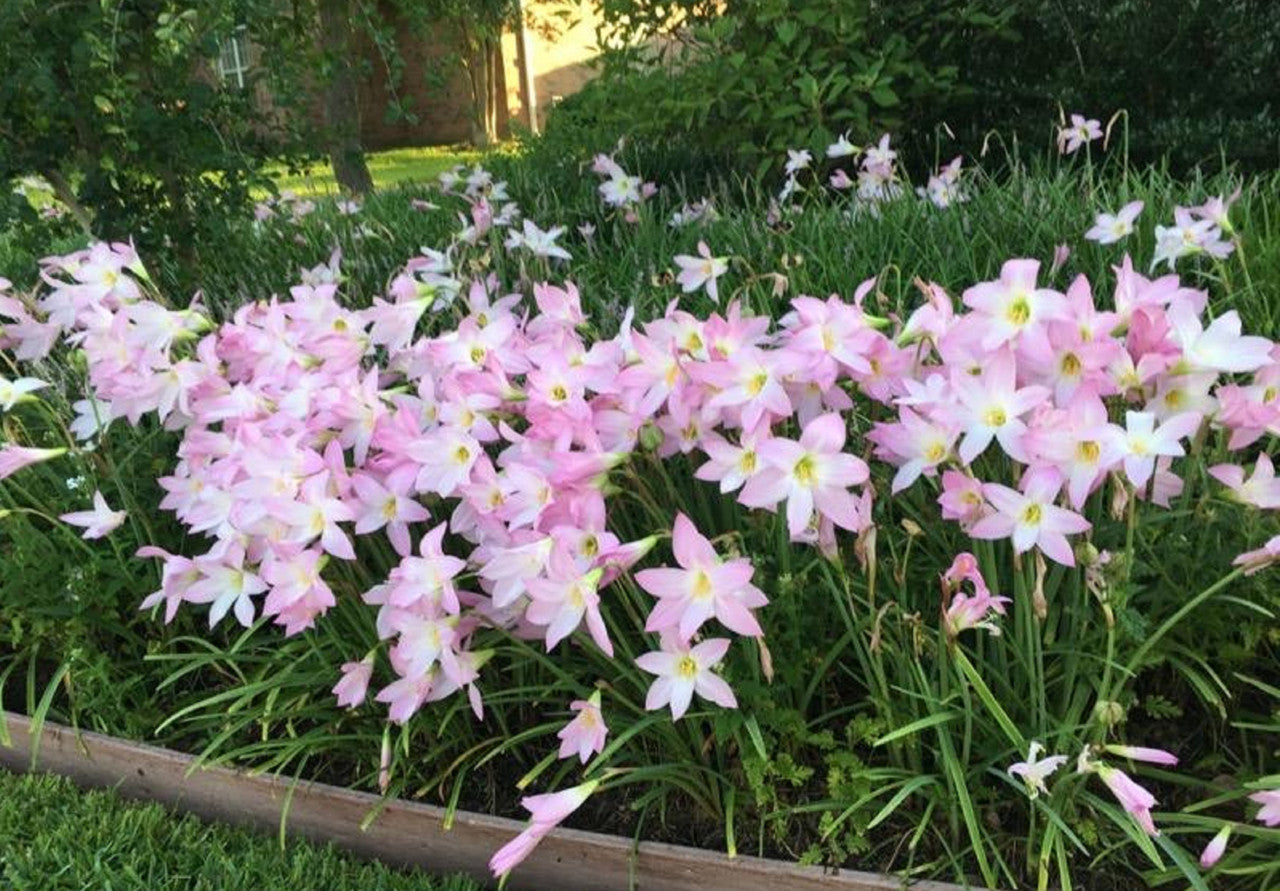
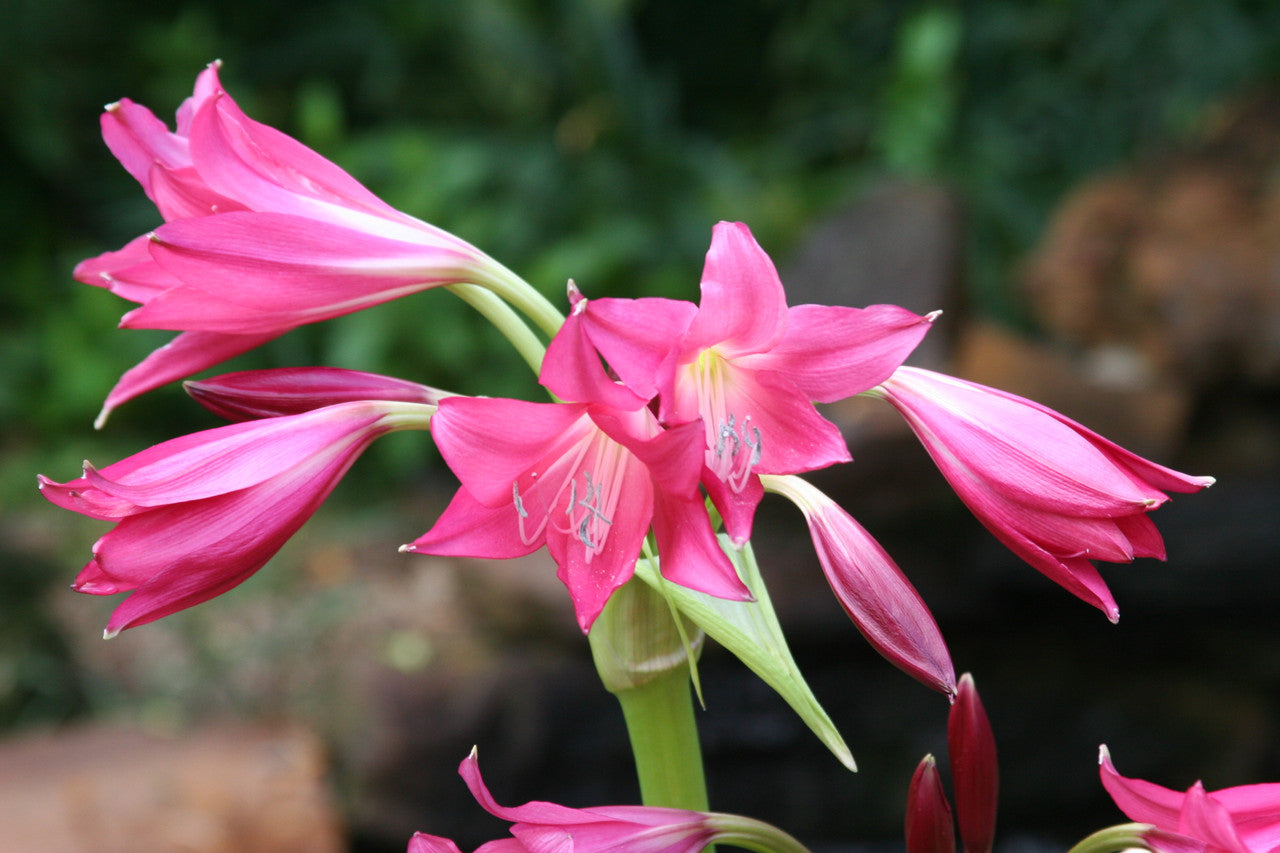
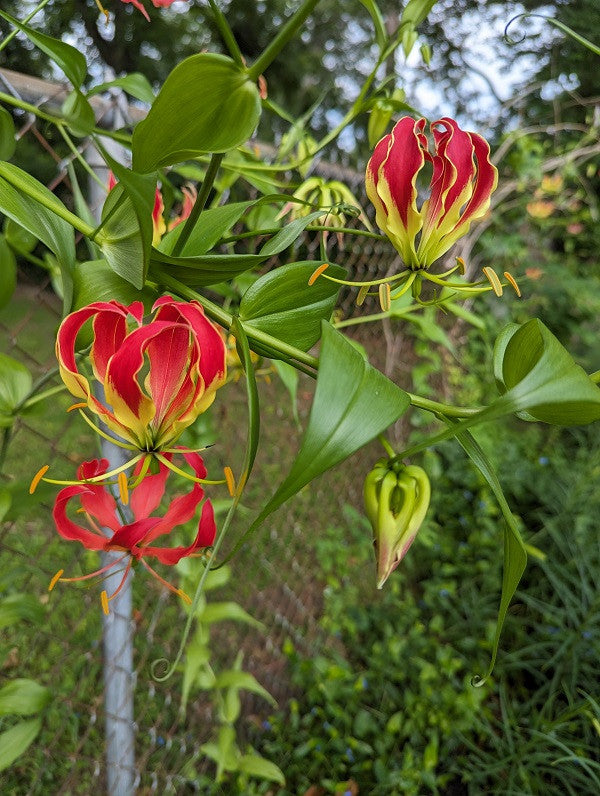
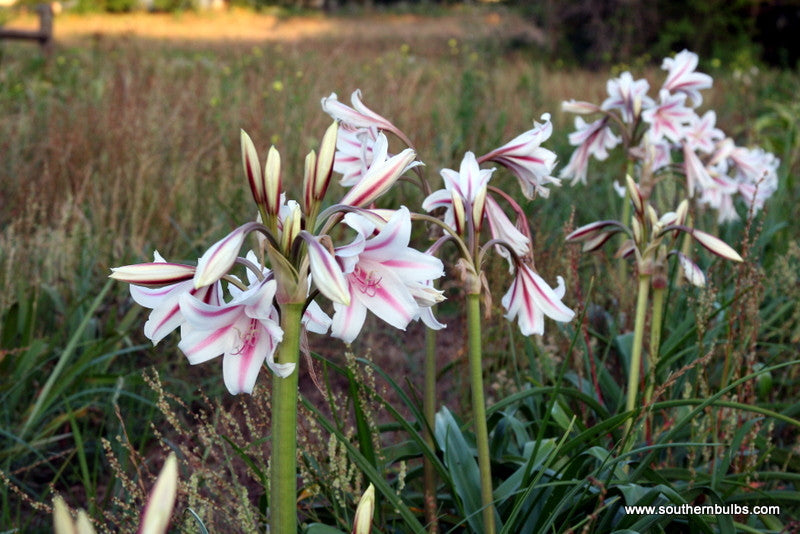
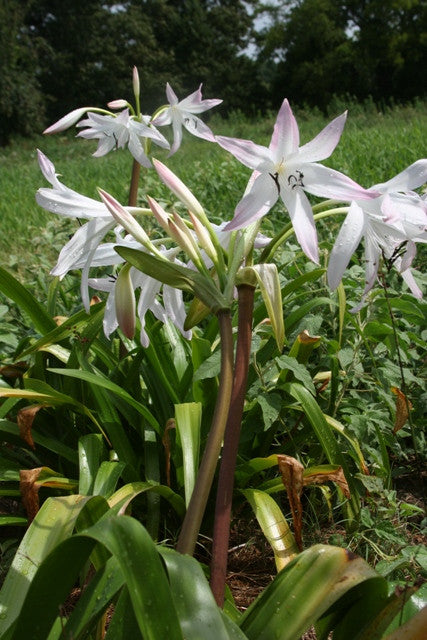
No single flower carries June to frost; the trick is a hand-off. Milk & Wine crinums open the season in May. ‘Ellen Bosanquet’ owns late June and July with wine-rose trumpets that hold their form in the worst heat. Gloriosa lilies climb the fence lines and produce blooms for eight to ten weeks of high summer. Rain lilies punctuate the whole stretch, firing days after every storm. And just when you think the trumpet flowers are done for the year, Crinum ‘Summer Nocturne’ — Thad Howard’s 1964 Texas hybrid — steps out for the encore, blooming from July or August all the way to frost, while ‘Mrs. James Hendry’ sends up waves clear through Thanksgiving. There is a bulb that blooms every week of the year in warmer climates. If your July garden is empty, it’s not the climate; it’s the roster.
2. Sun Is the Whole Ballgame
The single biggest reason bulbs don’t bloom is too little sunlight. A bloom costs energy, and the energy comes from the sun — in summer, that’s up to fifteen hours of it, and heat-lovers like crinum, tuberose, and rain lilies will happily take all of it. The math is simple: more sun means more foliage, more foliage means more nutrients to the bulb, more nutrients means more blooms and faster multiplication. If you see lush leaves and no flowers, don’t reach for fertilizer — and definitely go easy on nitrogen, which buys you leaves at the price of blooms (a low-nitrogen blend like 15-15-15, once or twice a year, is plenty). Reach for the shovel instead: prepare a sunnier spot first, then move the whole plant at once, foliage and all. Done that way, the plant hardly notices.
3. Plant Now — Yes, in This Heat
Fall planting became “the rule” because fall was when bulbs were historically available, not because bulbs demand it. A bulb is basically a stack of modified leaves, like an onion, and like an onion it loses moisture and energy sitting out of the ground. So the real rule is simpler: if the bulbs are available, it’s a good time to plant them. The one genuine danger in summer is the unplanted bulb itself — an hour in direct July sun can bake and ruin it. Keep the bulbs in the shade while you prepare the spot, plant in the cool of morning or evening, then water them in immediately to cool the soil and wake up the roots.
4. Get Depth and Spacing Right — and Know Your Bulb’s Ambitions
Depth first: a good rule is two to three times the height of the bulb; too shallow or too deep both trade flowers for foliage. Spacing depends on the future you want. For small bulbs like rain lilies, 3–6 inches apart (or several to a hole) buys an instant, established look; 6–10 inches is the steady middle path; 10-plus inches means patience now and no dividing later. Then scale up for ambition: a Milk & Wine crinum wants three to four feet, because in a decade it intends to be a clump the size of a small shrub — there’s a rent house on my drive to work with two clumps of close to a hundred bulbs each, and they stop traffic every June.
5. Water Deep, Seldom, and Early
Water in the early morning — it cuts evaporation and discourages fungus — and water deeply but infrequently, which trains roots down where the moisture lives. Mulch generously to hold it there. And resist the urge to overwater pots: summer bulbs hate wet feet, so let containers dry between drinks and make sure they drain. These plants were bred by a century of neglect at old homesteads; ‘Ellen Bosanquet’ will hold the garden together while you’re on vacation without a second thought.
6. A Leafy First Year Is a Win, Not a Failure
Freshly dug and transplanted bulbs spend their first season settling in — crinums famously sulk after a move, dry rain lily bulbs may take an extra year, and freshly dug tuberose might wait until next summer to bloom. That first-year foliage isn’t failure; it’s the bulb photosynthesizing, feeding itself, and very often multiplying underground. Give a new crinum the royal treatment its first two weeks — regular water with good drainage and a light, low-nitrogen feeding — and you might be rewarded early. But plan on the real show starting next year, and whatever you do, never cut the foliage down early. Those yellowing leaves are writing next summer’s checks.
7. Plant for the Nose, Not Just the Eyes
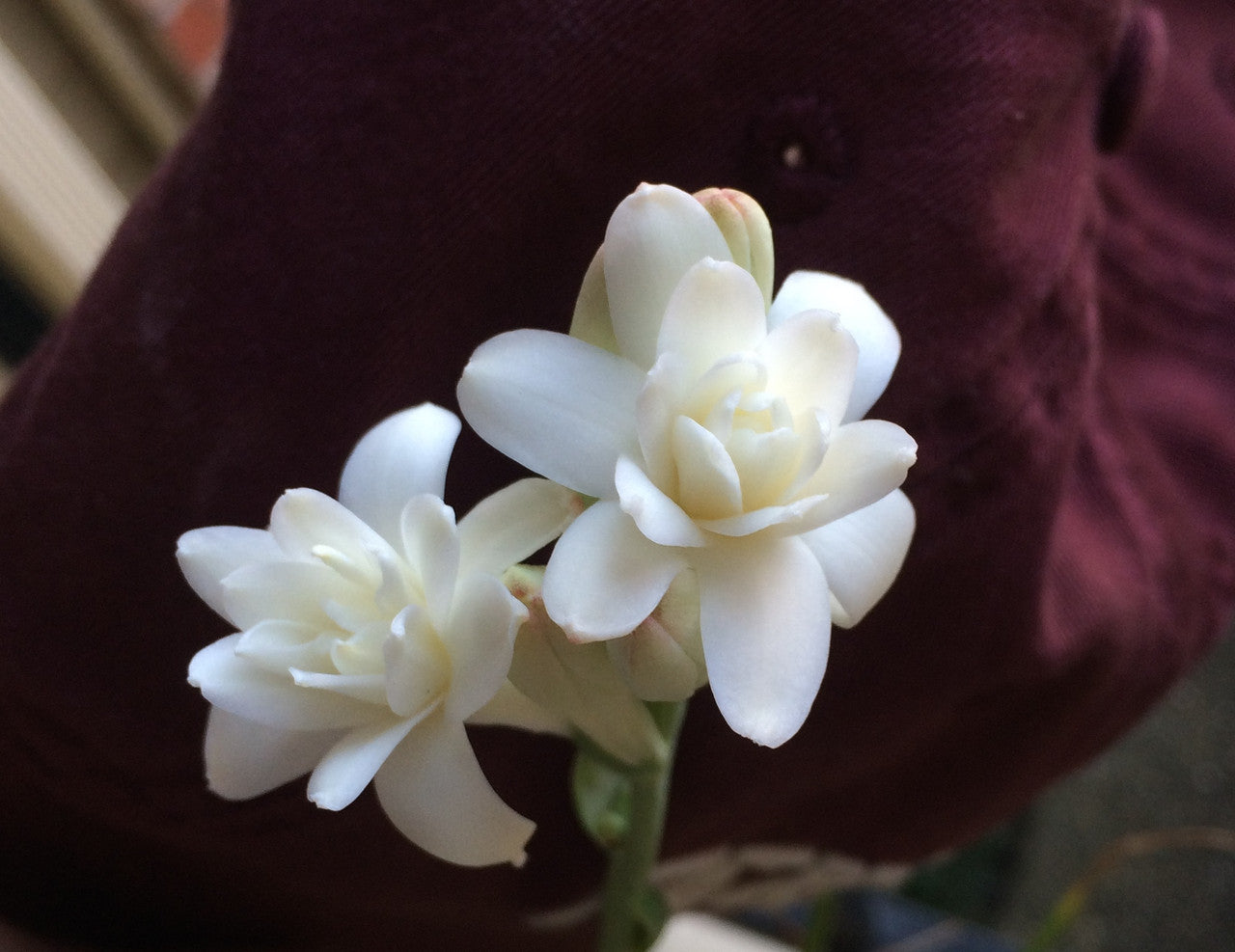
In the evening and the shade — exactly where summer color fades — scent carries the presence of the garden. It’s also the sense wired straight to memory; one whiff of the right flower and you’re eight years old in your grandmother’s yard. My own fragrant calendar runs the whole year: Narcissus italicus in January, jonquils in February, ‘Golden Dawn’ and ‘Grand Primo’ in March, hardy amaryllis in April, ‘Mrs. James Hendry’ from May onward, gardenias in June, tuberoses from July (some years into December), white butterfly ginger in August, sweet olive in September. Right now the move is tuberose — full summer sun, yes, really; it’s in the agave family — planted along walkways and patios, or in pots you can carry to wherever the evening gathers.
8. Put Summer in Pots
Containers are how you aim a garden. A single blooming bulb in a small pot makes a dining-table centerpiece; blood lilies in pots get carried to wherever the party is; and tuberose in a pot moves the perfume around like a lamp. The best crinum for containers, hands down, is ‘Summer Nocturne’ — golf-ball-sized bulbs, tidy two-to-three-foot habit, a true “thriller” with room left for your fillers and spillers, hummingbird-approved and deer-ignored. One caution from experience: spiky-foliaged bulbs like tuberose need fewer per pot than you think.
9. One for the Sun, One for the Shade
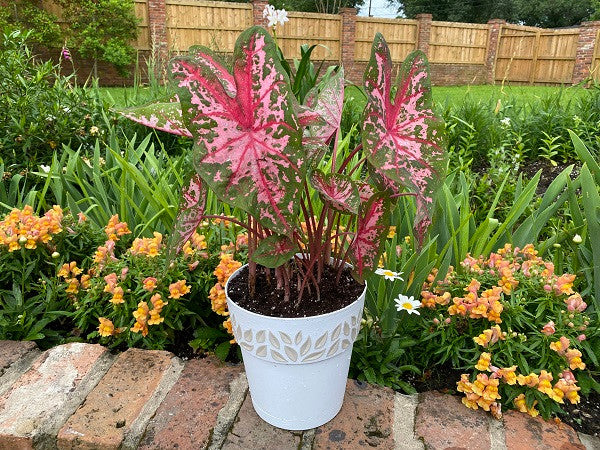
Every garden has two tricky spots: the blazing corner where the afternoon sun beats down, and the shady patch where flowers sulk. Give the sun its workhorse — the old orange daylily, tough as boots, each stalk carrying dozens of one-day blooms so the show runs for weeks, happy on slopes, fence strips, and mailbox beds. Give the shade a job with caladiums, which won’t even start until the soil hits 70 degrees and then carry color into December (water them early or late, never on hot leaves). Don’t ever discount the things that work so well.
10. Harvest the Free Flowers
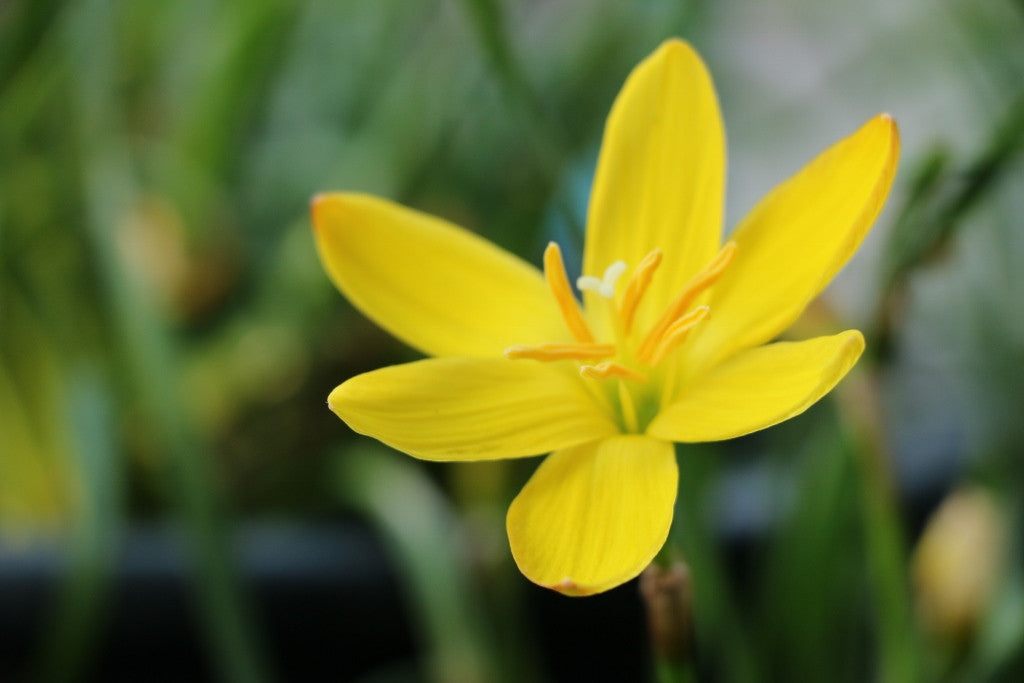
After a rain-lily flush fades, little three-sided pods follow. Wait until a pod is about to burst, then either scratch the papery black seeds into the ground where you want them or let the wind carry them off to surprise you in a couple of years. Yellow rain lilies multiply by offsets and seed, which is why a $10 handful becomes, in a few years, enough gold to share over the fence — the way every one of these heirlooms traveled in the first place.
11. The September Garden Is Bought in July
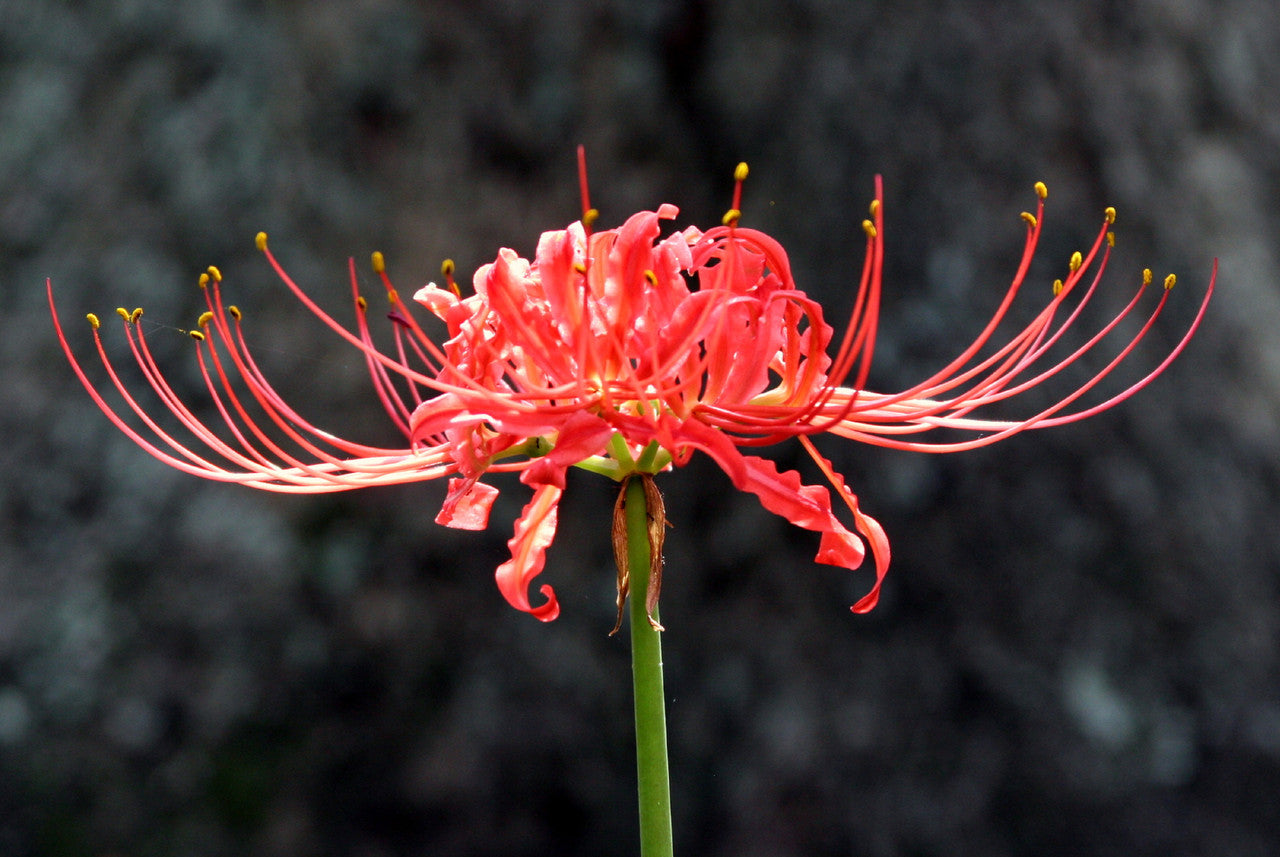
This is the tip that separates the veterans: fall bloomers sell out in summer, before a single flower opens. It already happened this season — Summer Nocturne sold through in June, the caladiums and daylilies are gone until the next dig, and the oxblood “schoolhouse” lilies were spoken for before their September show. A bulb wants to be in the ground, not on a shelf, and there is no shelf by August. The red spider lilies are boxed and ready right now; order them, plant them by early fall, and let September surprise you. And when you see bare dirt where spider lilies or oxbloods sleep through summer — leave it be. That empty spot is loaded.
From This Summer’s Letters
“There is a bulb that blooms every week of the year in warmer climates.”
“A bulb wants to be in the ground, not on a shelf.”
“No crinum in the South has ever died,” my professor and co-author Dr. Bill Welch always said. We lost Dr. Welch this June. His crinums, of course, are all still blooming — which is exactly the point of everything above.
Shop This Story
Availability as of July 10, 2026:
- Single Tuberose — 5 tubers, $15 (in stock)
- Double Tuberose — 5 tubers, $15 (in stock)
- Yellow Rain Lily — 10 bulbs, $15 (in stock)
- Pink Rain Lily pots — Habranthus robustus, $25 (in stock)
- Crinum ‘Ellen Bosanquet’ (small bulbs, limited)
- Crinum ‘Stars and Stripes’ pots, $30 (very limited)
- Red Spider Lily — blooms September, $16 for 5 (order now)
- Mrs. James Hendry, Summer Nocturne, Oxbloods, Philippine Lily, Caladiums, and Daylilies are on the waitlist — email info@southernbulbs.com
Remember — you’re planting a story, and these bulbs are for a lifetime. Make sure you sign up for the Southern Bulb Co. newsletter for what’s blooming each week and the Weekly Special — www.southernbulbs.com