Or: what flowers attract pollinators?
Table of Contents
- Introduction to Pollinators
- List of Bulbs the Southern Bulb Company carries that are good pollinators
- Other Flowers that are Good Pollinators
- Common Questions
You may be wondering, “What is a pollinator?” Well, pollinators are animals that move pollen from one flower to another, helping in the fertilization of plants. Pollen itself is composed of individual pollen grains that contain the male genetic material of the flower. These are carried by the pollinators to the stigma of a flower, which carries the male genes to the center of the flower, fertilizing it. This is good for your gardens, as it will allow your flowers to propagate throughout your garden.
Butterflies and hummingbirds are very similar when it comes to flowers they like. Because of the longer proboscis on the butterfly and the long tongue of the hummingbird, it causes them to enjoy longer, thinner flowers. They both sip at the nectar being held within the flower. Hummingbirds also have no sense of smell, and as such are drawn to bright colors.
Butterflies and hummingbirds are very similar when it comes to flowers they like.
The flowers they like most are these:
- bee balms
- columbines
- daylilies
- foxgloves
- hollyhocks
- cleomes
- impatiens
- petunias
Bees, on the other hand, are drawn to flowers that have pollen. They also like flowers that are easy to land on, like tulips, as they are actually really bad at flying. Take daffodils for instance: once they were great for bees, but humans have selecitvely bred this “perfect daffodil” that looks up at people, allowing us to enjoy its beauty. It no longer allows bees to land on it, though, so bees are rarely drawn to daffodils now. Flowers like lavender are the easiest for bees because of the tiny flowers and lots of little handhold for its legs.
Bees really enjoy these flowers:
- Lavender
- Catmint
- Calendula
- Bee balm
- Sedum
- Borage
- Foxglove
- Crocus
- Anise hyssop
- Heliotrope
List of Bulbs The Southern Bulb Company carries that are good pollinators
Southern Bulbs has several flowers that attract pollinators. Most of our flowers attract butterflies and hummingbirds, and a handful also attract bees. The flower bulbs that attract hummingbirds and butterflies are as follows:
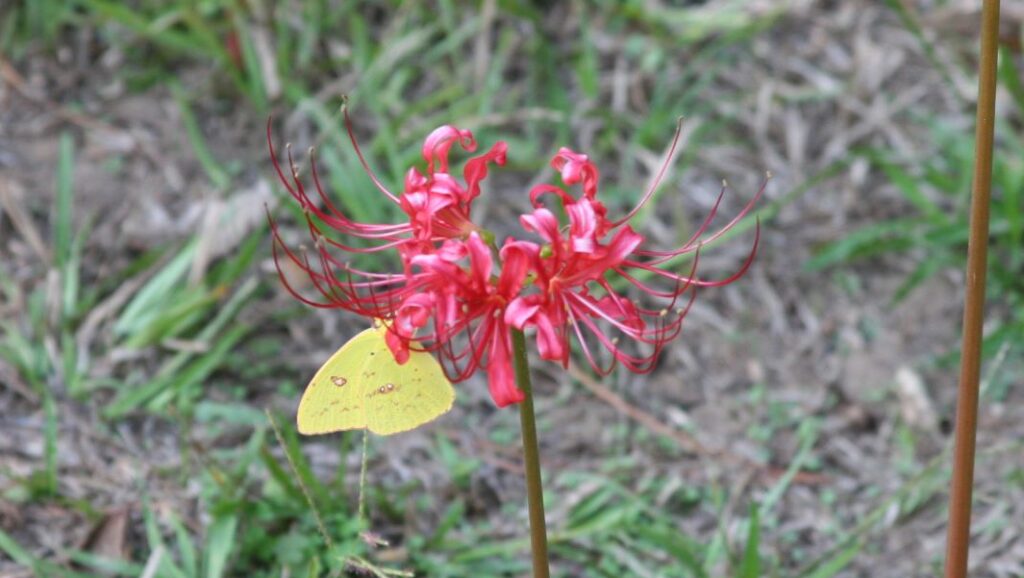
- Red Spider Lily
- Our “signature bulb”! It has a unique flower whose multiple filaments give it its characteristic spider look.
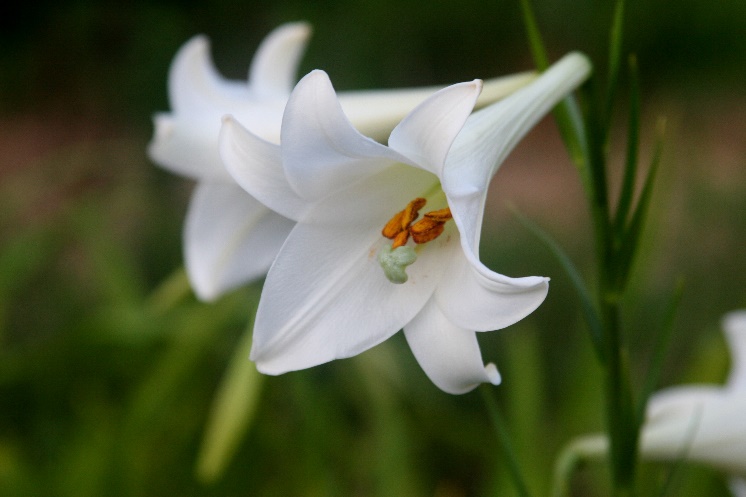
- Tall Philippine lily
- These can grow to be 6 feet tall! It’s a garden candelabra, growing a 4-5 inch long trumpet.
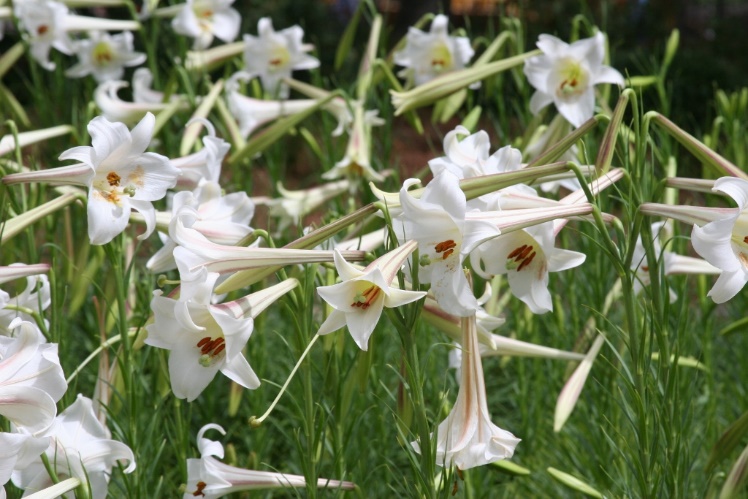
- Dwarf Philippine lily
- Unlike the Tall Philippine lily, this one will only grow to be about 3 feet tall. It has the same trumpet-shaped candelabra as its taller sibling, too.
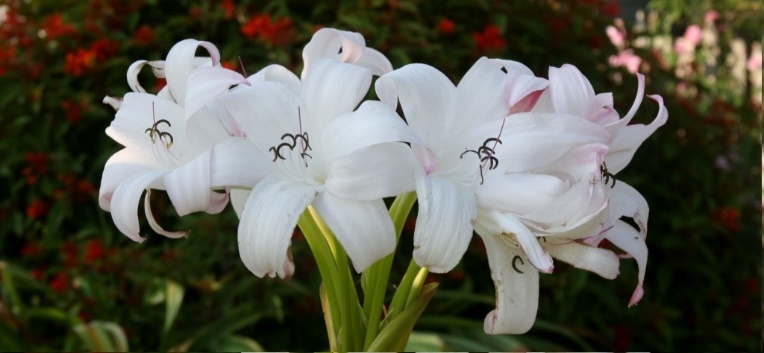
- Crinum Mrs. James Hendry
- Blooms several light pink flowers that have an unforgettable smell! Its light spice scent will fill your room and grace your dreams.
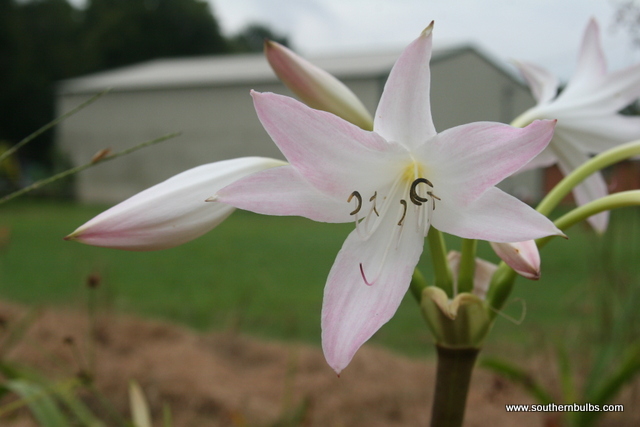
- Crinum Summer Nocturne
- A beautiful, blush-colored flower that blooms in a star-shaped trumpet.
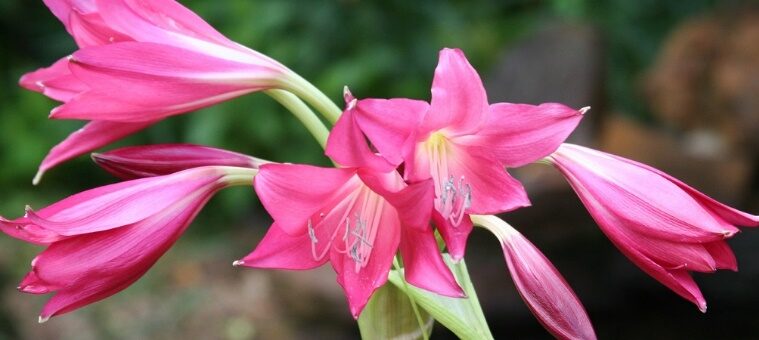
- Crinum Ellen Bosanquet
- Very similar in shape to the Crinum Summer Nocturne, but it grows larger and in a beautiful vibrant pink.
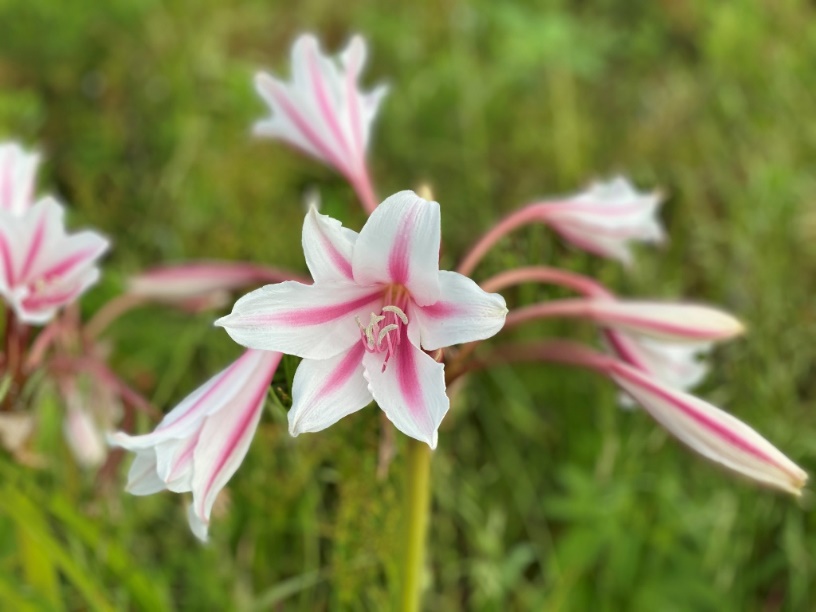
- Crinum Milk & Wine lily
- Living up to its name, the milk and wine lily looks as if someone poured wine into the center of this beautifully milky colored flower.
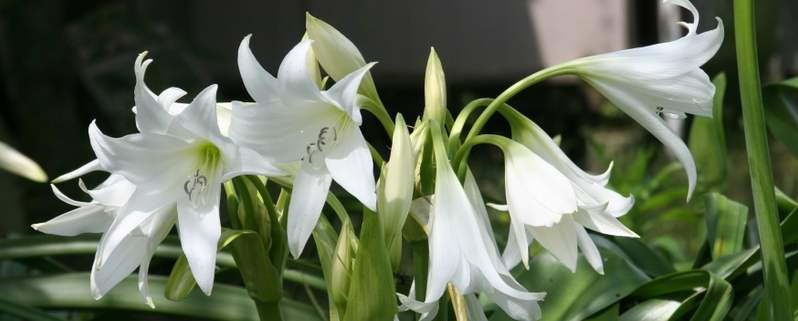
- White Crinum lily
- White is definitely not boring! You have never seen a flower look as elegant as the white crinum lily.
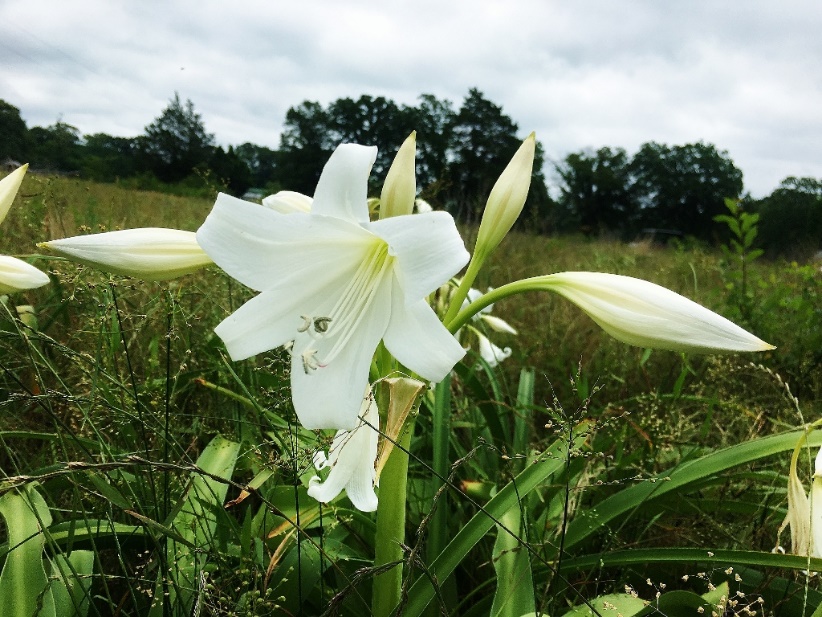
- Burbank’s white queen (Crinum x)
- This is a very slow growing plant, but very rewarding, as it blooms a gorgeous white flower reliably in many temperatures.
We also have flowers that attract hummingbirds, butterflies, and bees, which are these:
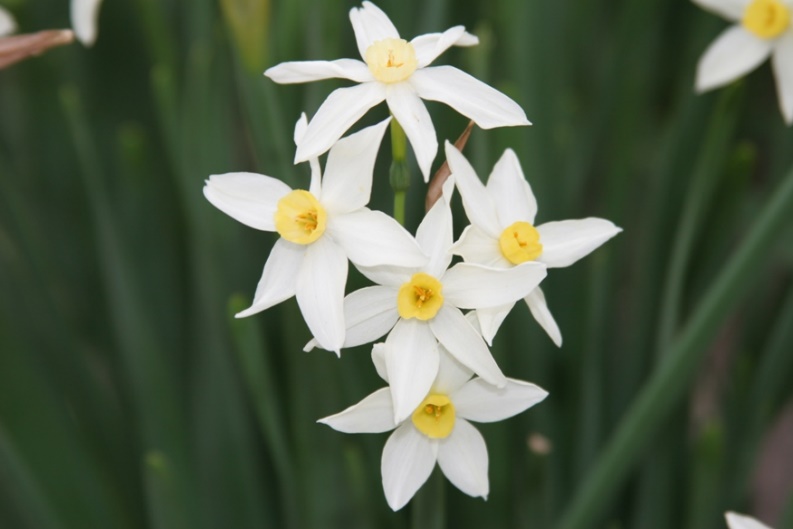
- Italicus
- Paperwhite, star-shaped petals make up this beautiful flower. The flowers emerge in bulk from the main bulb.
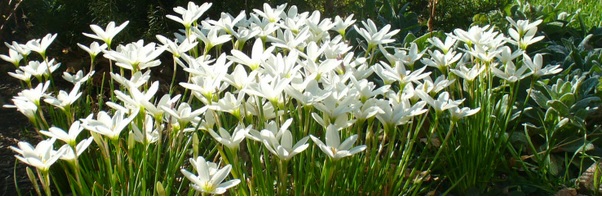
- White rain lily
- They have a very different feel compared to the other lilies, as each petal is independent of the other, taking away the trumpet feel and making it unique.
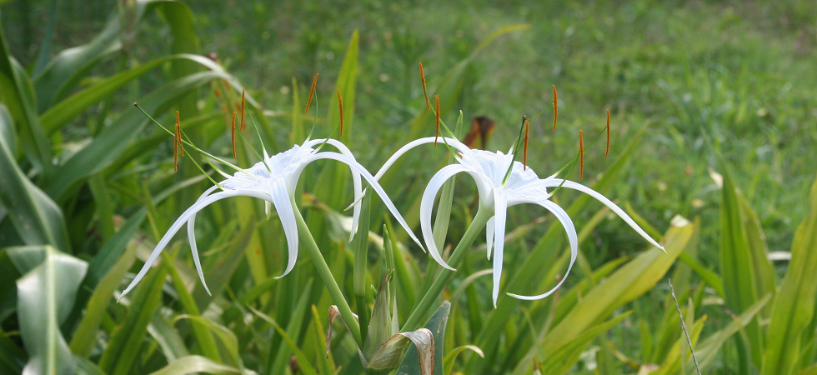
- Tropical Giant
- It has a very special flower that grows long, thin petals that have a similar feel to our red spider lilies
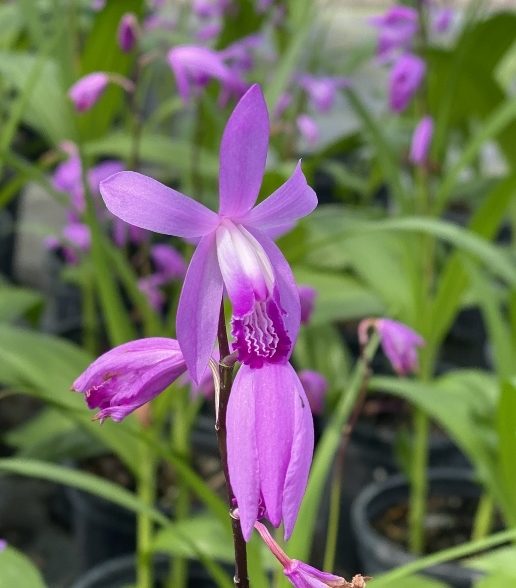
Then we have the Ground Orchid, which attracts bees and butterflies, but is less appealing to hummingbirds. It has striking purple flowers. It requires less light than most flowers, allowing it to grow in many locations in your garden.
Other Flowers that are Good Pollinators
There are lots of other flowers that attract pollinators that we don’t carry. Some of them that attract bees, hummingbirds, and butterflies are:
- Glory-of-the-Snow
- Winter Buttercup
- Grape Hyacinth
- Anemone
- Chequered lily
- Crown Imperial
- Allium/Ornamental onions
- Dutch Iris
- Wood Hyacinth
The ones that attract mostly bees are as follows:
- Snowdrops
- Winter Aconite
- Crocus
- Siberian Squill
- Wood Anemone
- Reticulated Iris
- Camassia/Quamash
- Spanish Bluebells
And the last two are:
- Species Tulips, which attract both bees and hummingbirds, but not butterflies.
- Hyacinth, which attracts bees and butterflies, but not hummingbirds.
Do bees like tulips?
- Yes they do. A bee hive needs lots of flowers, so they might not be the main source of food, but they sure will be a nice suppliment!
What flowers don’t attract bugs?
- The following flowers, though some may attract bees, repel or are otherwise unattractive to bugs:
- Marigolds
- Chrysanthemums
- Alliums
- Petunias
- Nasturtiums
- Common Lantanas
- Geranium
- Tansy
- Floss Flowers
Do bees like daffodils?
- Yes, they do!
If you want to draw specific pollinators to your yard, feel free to use this as a reference. I hope you choose flowers that make both you and your garden friends happy!

I’m on the Georgia coast – zone 9 ish. We are establishing a pollinator garden. What bulbs will work? I am ordering red spider lily from you.
Hi Debra! There are great bulb selections for Zone 9. Believe it or not, starting in late February and March we have bees and butterflies on our Narcissus tazetta ‘Grand Primo’ bulbs (“Grand Primo” for short) and snowflakes (Leucojum aestivum). Our Byzantine gladiolus, which is a fall planted glad, always attracts a lot of bees and blooms in April. May is special because our Crinum ‘Mrs. James Hendry’ (large) and prolific pink rain lily (Habranthus robustus-small) begin to bloom and attract all sorts of wonderful insects. June and July are filled with the blooms of other crinum, rain lilies, and Hymenocallis. Late July and August also gives us the stunning blooms of the Philippine lilies, tall white trumpet shapes blooms with maroon ribbing. The hummingbirds love them, and as they fade, the fall blooming bulbs and Salvia leucantha kick in, attracting the migrating hummingbirds en masse. Hope this brief write up (from my phone so apologize for no product links and missed grammar) helps you!!