
The Trumpet That Refused to Die
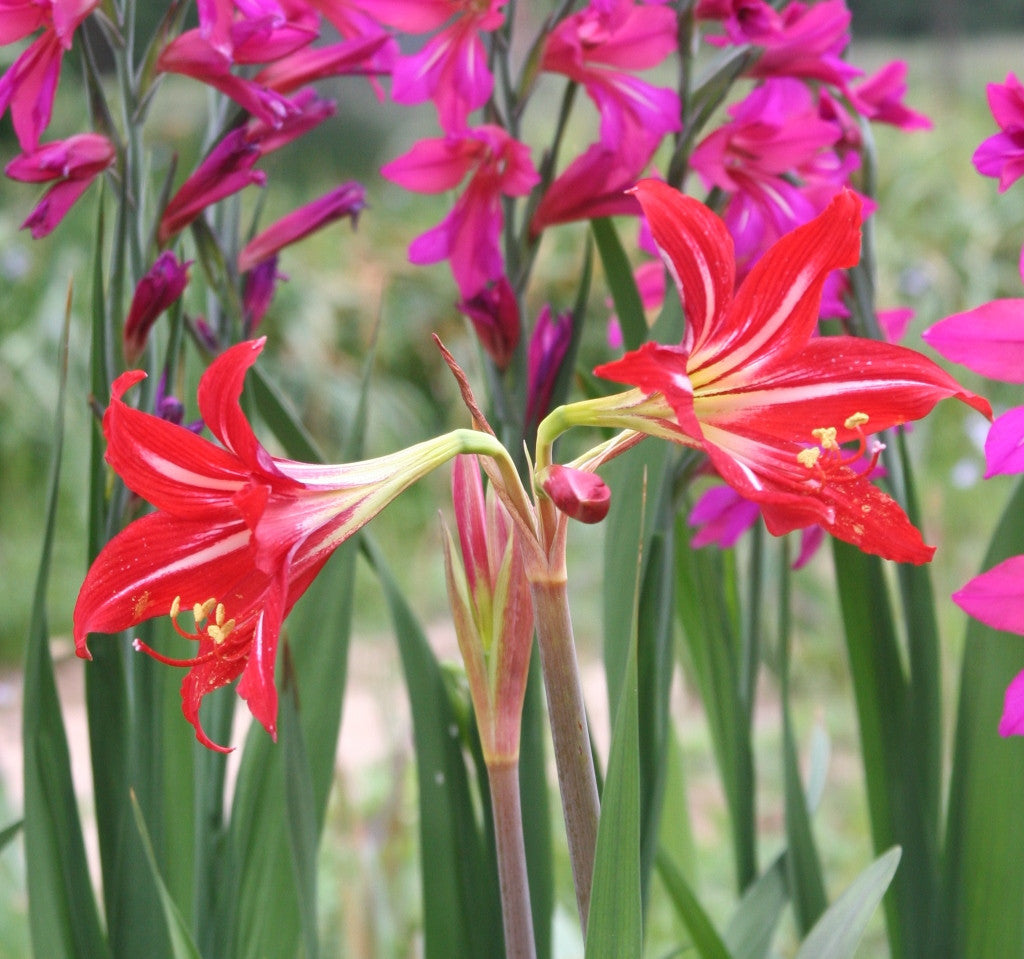
Every March I start watching the old homesites, because April belongs to a flower most garden centers have never heard of: the hardy amaryllis, known across the South as the St. Joseph’s Lily. You have seen it even if you didn’t know its name — clumps of deep red trumpets with a white star down the throat, blooming beside porch steps and cemetery gates where nobody has gardened in fifty years.
Where It Came From
In the late 1700s, an English watchmaker named Mr. Johnson crossed two South American species and produced the first man-made amaryllis hybrid — Hippeastrum x johnsonii. One of its parents was Hippeastrum vittatum, the striped heirloom documented since the 1700s. Johnson’s cross inherited the trumpet and the stripe and added something priceless: toughness. It crossed the Atlantic, moved into Southern dooryards, picked up the St. Joseph’s name for its habit of blooming near the saint’s feast in March and April, and then simply refused to leave.
Why It Survives
The amaryllis you buy in a box at Christmas is a tender hybrid bred for the windowsill; plant it outside and one hard freeze usually ends the story. The hardy amaryllis is the older, sturdier branch of the family — happy in the ground from Zone 8 south, indifferent to August, and content to be ignored. Zone 7 is pushing it: in our zero-degree freeze of 2021, the bulbs near structures sailed through while some in the open field didn’t return, so up north give them a good winter mulch and a spot near the house. Like most of the heirlooms I hunt, it was selected by a century of neglect: the clumps that survive at abandoned homesites are there because nothing about a Southern year can kill them.
How to Grow It
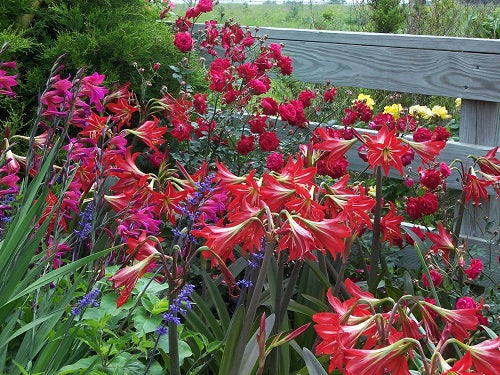
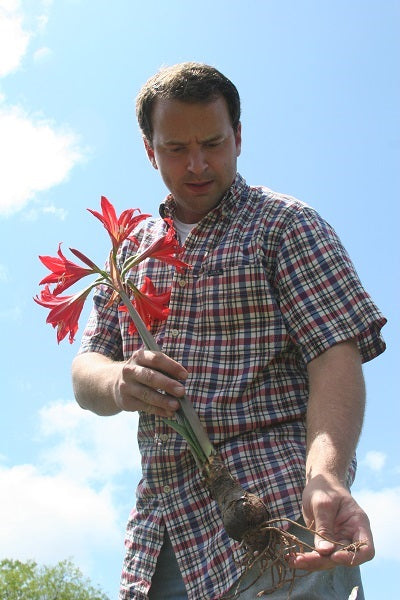
Give it sun — at least six hours, more if you can — and soil that drains. Plant the bulb with its neck at or just above the soil line, the way you’d set a crinum, and space bulbs eight to ten inches apart so the clump has somewhere to go. Water it in, mulch lightly, and then practice leaving it alone. After the April show, let every leaf stand until it yellows on its own; that foliage is feeding next year’s trumpets. A little low-nitrogen fertilizer once a year is plenty, and none at all is survivable — ask any cemetery.
The Patience Part
A freshly moved hardy amaryllis often sulks a season, sending up strappy foliage and no flowers while it settles in. Don’t dig it up to check on it. The old clumps you admire took decades of being left alone, and yours is simply starting its own fifty-year story. When it does bloom, lean in close — there’s a slight spicy fragrance that’s the icing on the cake — and cut a stem for the kitchen table, where the trumpets last beautifully in a vase.
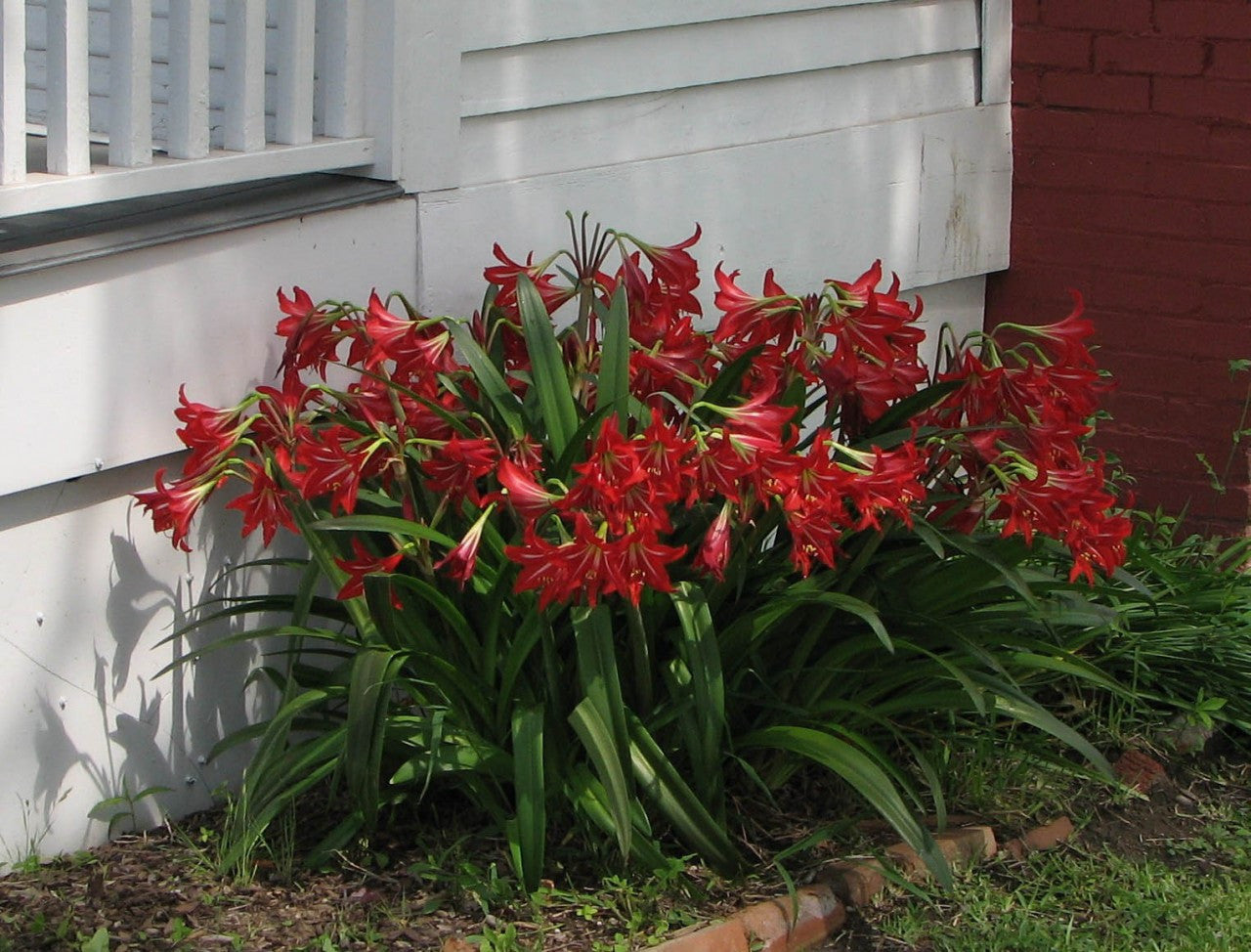
We grow the hardy amaryllis on the farm from proven Texas stock — see the Hardy Amaryllis page, and since digs sell out, email info@southernbulbs.com to get on the waitlist.
Remember — you’re planting a story, and these bulbs are for a lifetime. Sign up for the Southern Bulb Co. newsletter for what’s blooming each week and the Weekly Special — www.southernbulbs.com