
The September Surprise
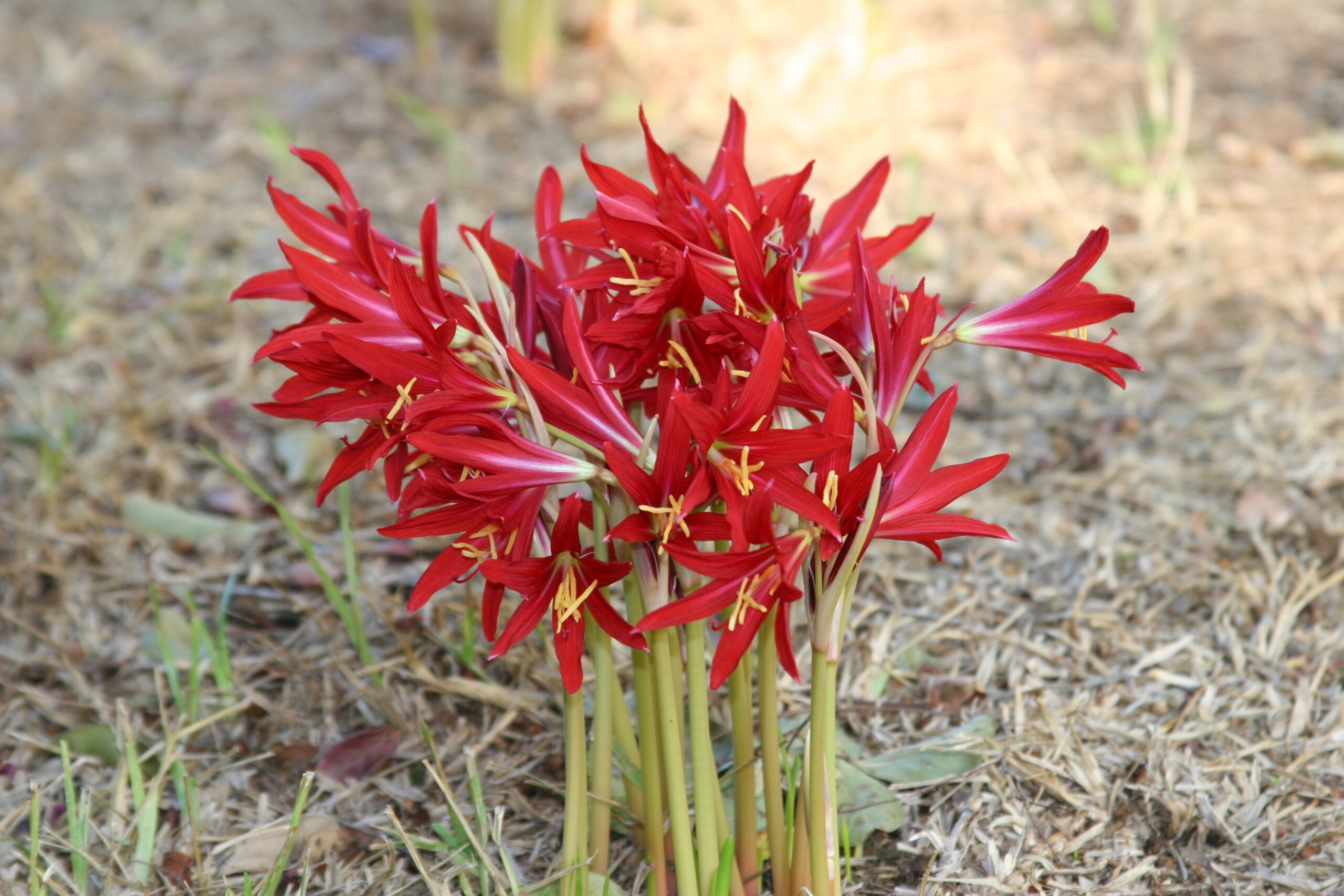
Right now — the hottest, most discouraging stretch of the gardening year — the smartest planting you can do is for a flower that shows no sign of existing. Oxblood lilies spend August as bare dirt. Then the first real fall rain comes, and within days, deep red trumpets erupt by the dozen where there was nothing, like the ground kept a secret all summer. Texans have called them schoolhouse lilies for a century because they reliably bloom right as the school year starts.
What It Is
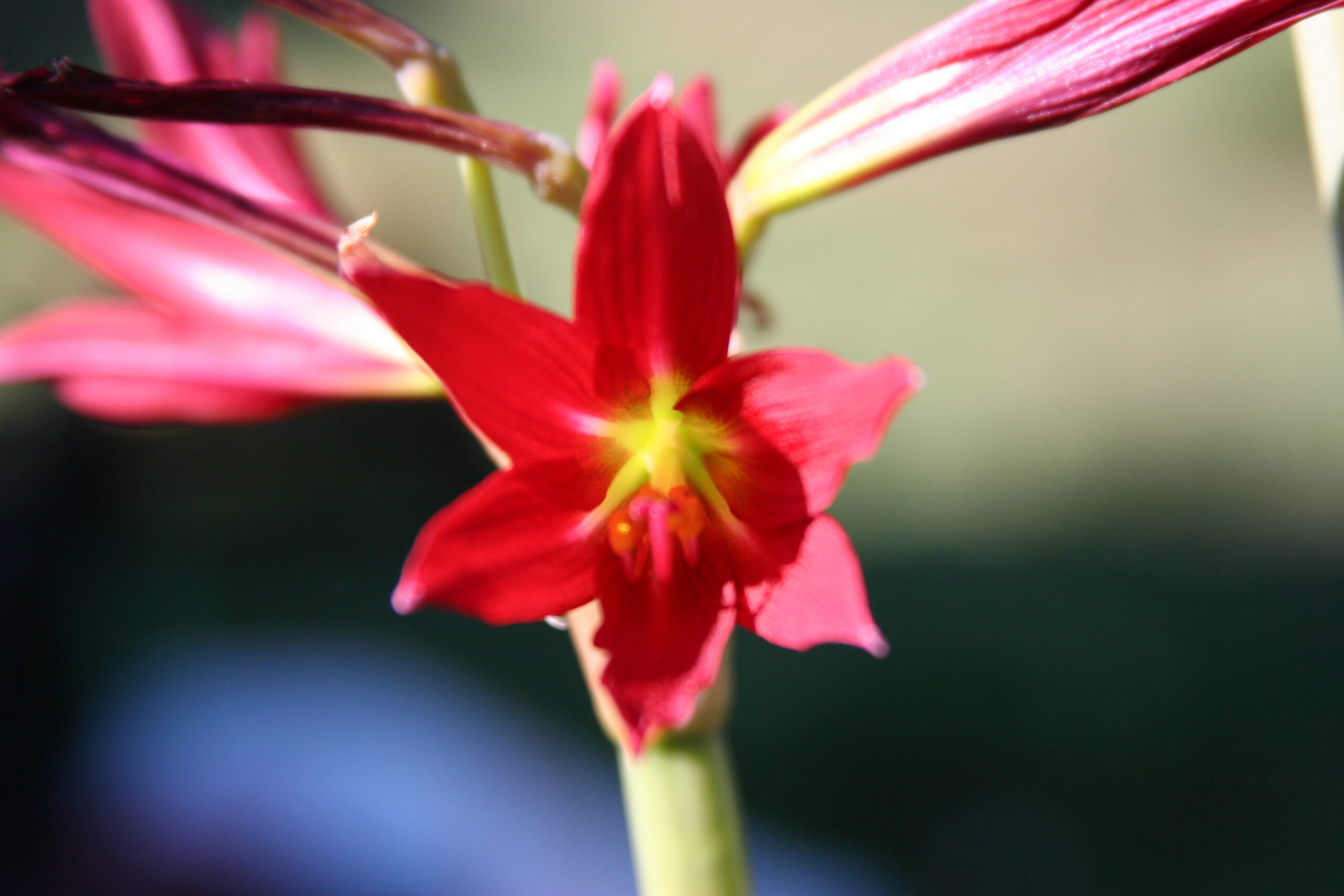
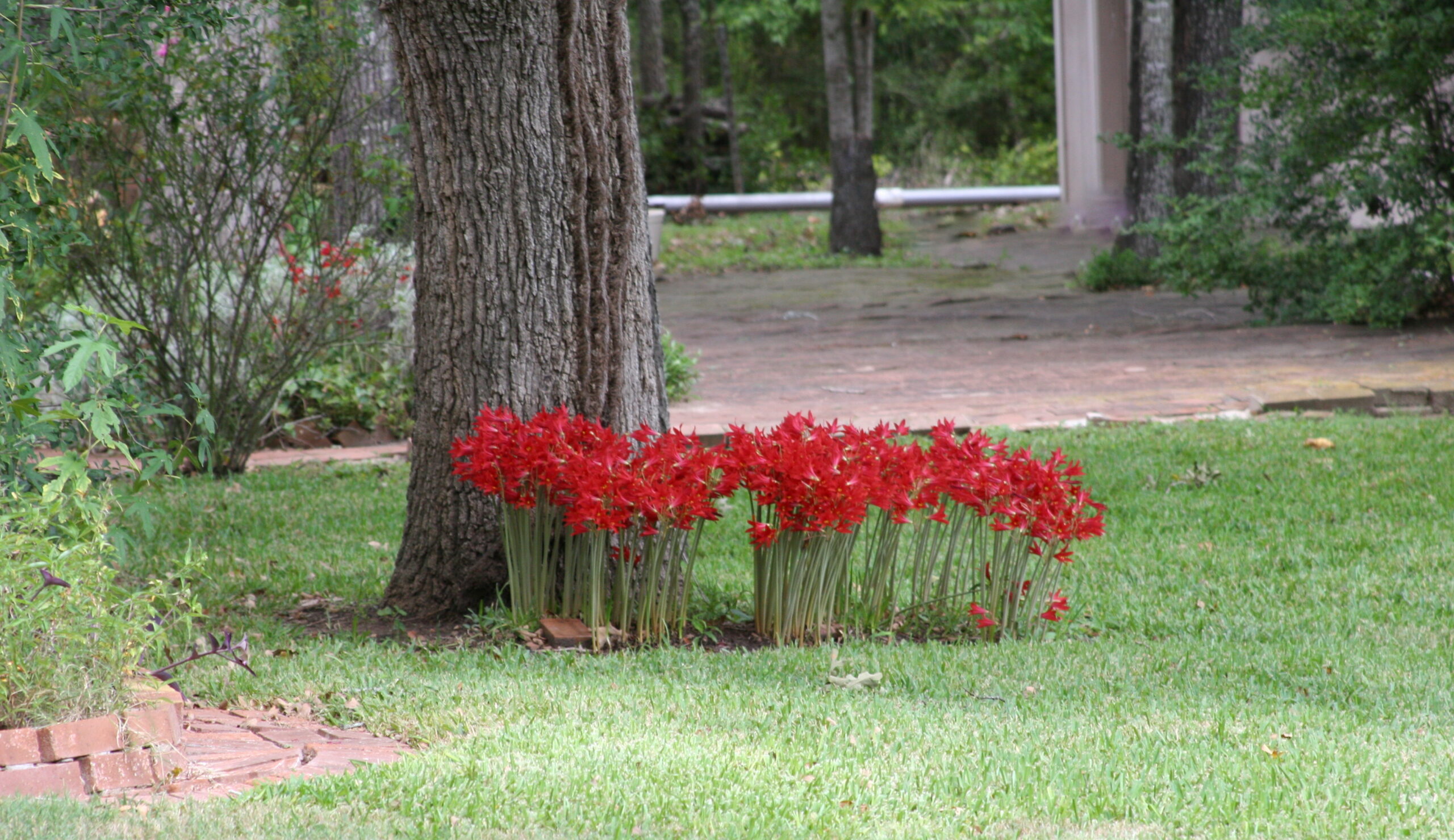
Rhodophiala bifida is a small amaryllis cousin from South America — foot-tall stems, clusters of oxblood-red trumpets, blooming almost overnight on fall rain the way rain lilies bloom on summer storms. The flowers come first; the strappy winter foliage follows and quietly feeds the bulb until it disappears again in spring. It is one of the most reliable heirlooms in the South and one of the most startling, because you forget it’s there right up until it suddenly is.
How It Got Here
German settlers brought oxbloods into Central Texas in the 1800s, and the bulbs did what all great heirlooms do: naturalized, multiplied, and out-lived every fence line they were planted along. The old Hill Country towns are stitched with them. Nearly every oxblood in American gardens traces back to those passalong Texas stocks — bulbs with a hundred and fifty Texas summers already behind them.
Why August Is Planting Time
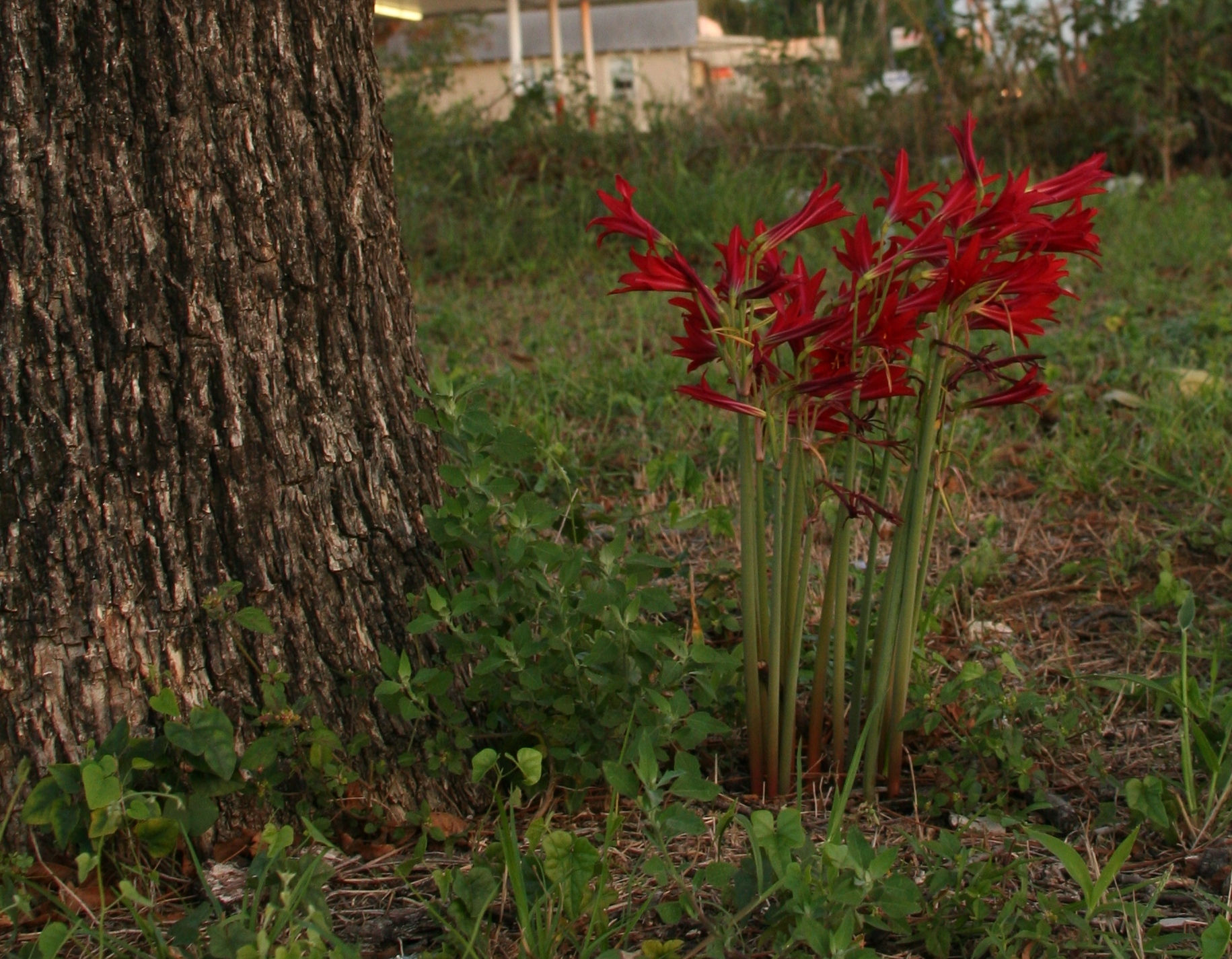
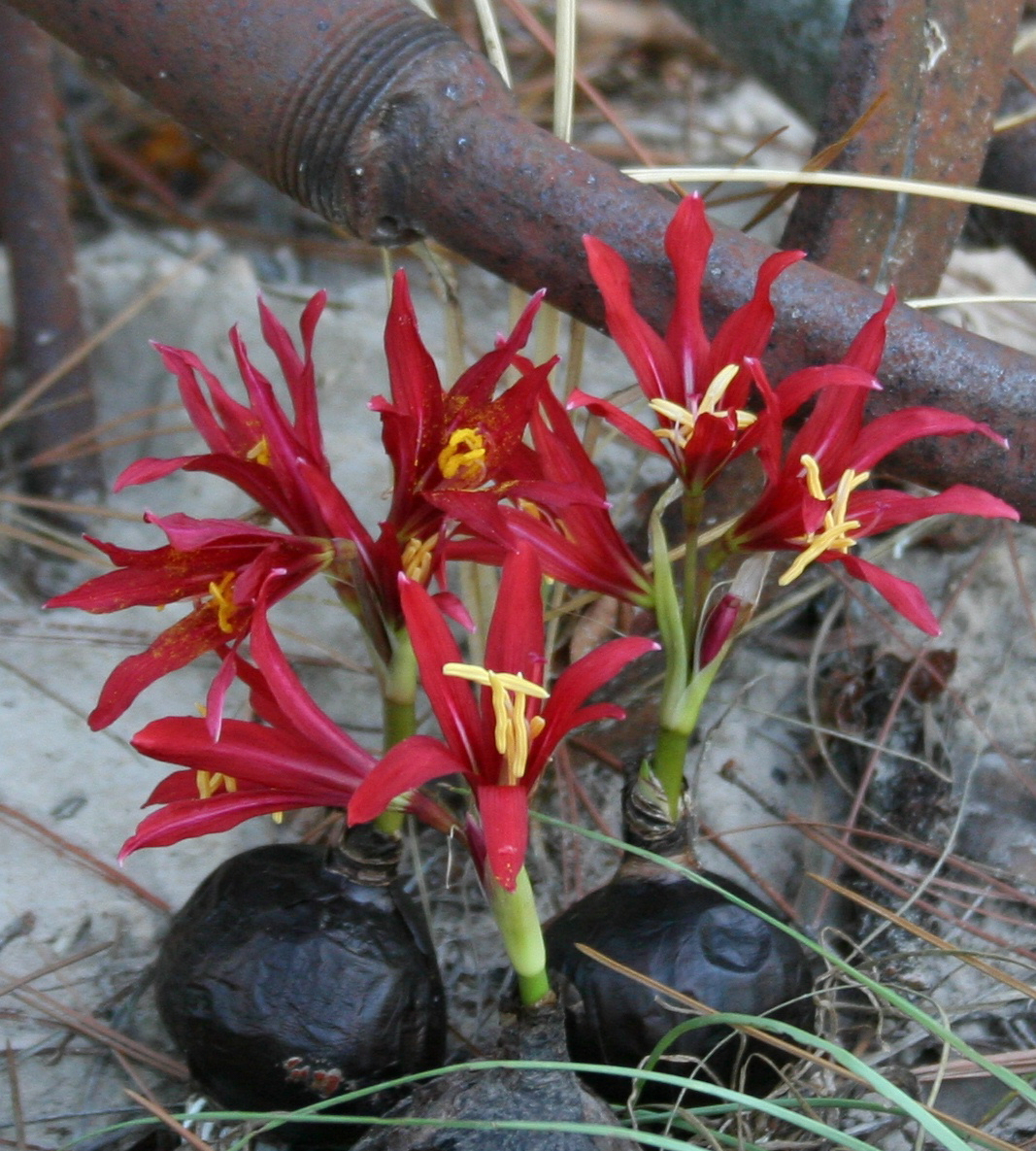
The bulb is dormant right now, which makes late summer the perfect — and traditional — window to plant: settle the bulbs before the fall rains ring the dinner bell, and you can be surprised in your own yard this September. Plant them three to four inches deep, a few inches apart in drifts (they look best in crowds), in sun to the bright shade under deciduous trees. Water them in once. That’s genuinely the whole job. One warning for the impatient: freshly moved bulbs sometimes skip their first fall’s bloom while they root in — the foliage that follows is the bulb promising next year.
The Fifty-Year Patch
Oxbloods multiply steadily by offsets, and an undisturbed patch thickens into a red carpet that returns every September without one minute of care — no dividing required, no feeding required, mowing-tolerant once the foliage has yellowed in spring. Mark the spot, though, or plant something evergreen at the edge: the number-one way gardeners lose oxbloods is digging into “empty” ground in July. That bare spot is loaded.
Our oxblood lilies come from old Texas passalong stock and sell out nearly every year before they bloom — see the spider lily & surprise lily collection, or email info@southernbulbs.com to get on the list for the next dig.
Remember — you’re planting a story, and these bulbs are for a lifetime. Sign up for the Southern Bulb Co. newsletter for what’s blooming each week and the Weekly Special — www.southernbulbs.com